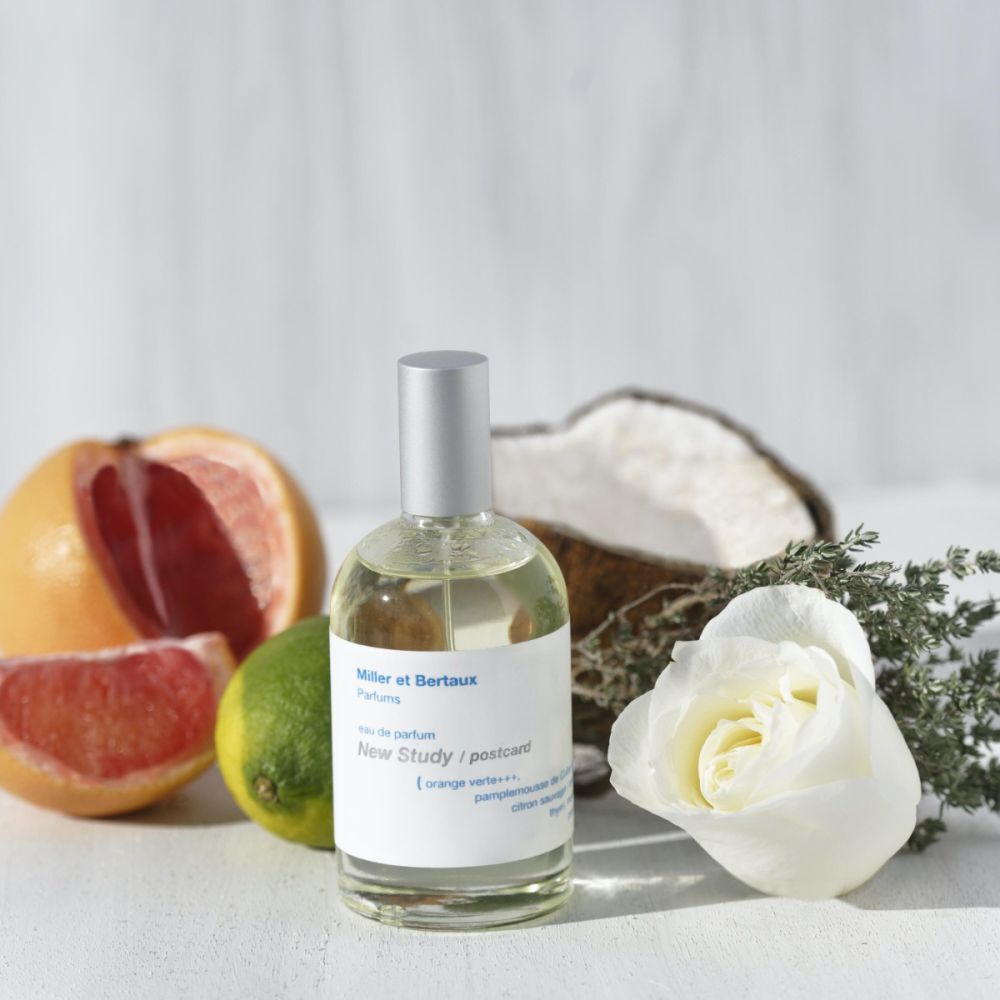
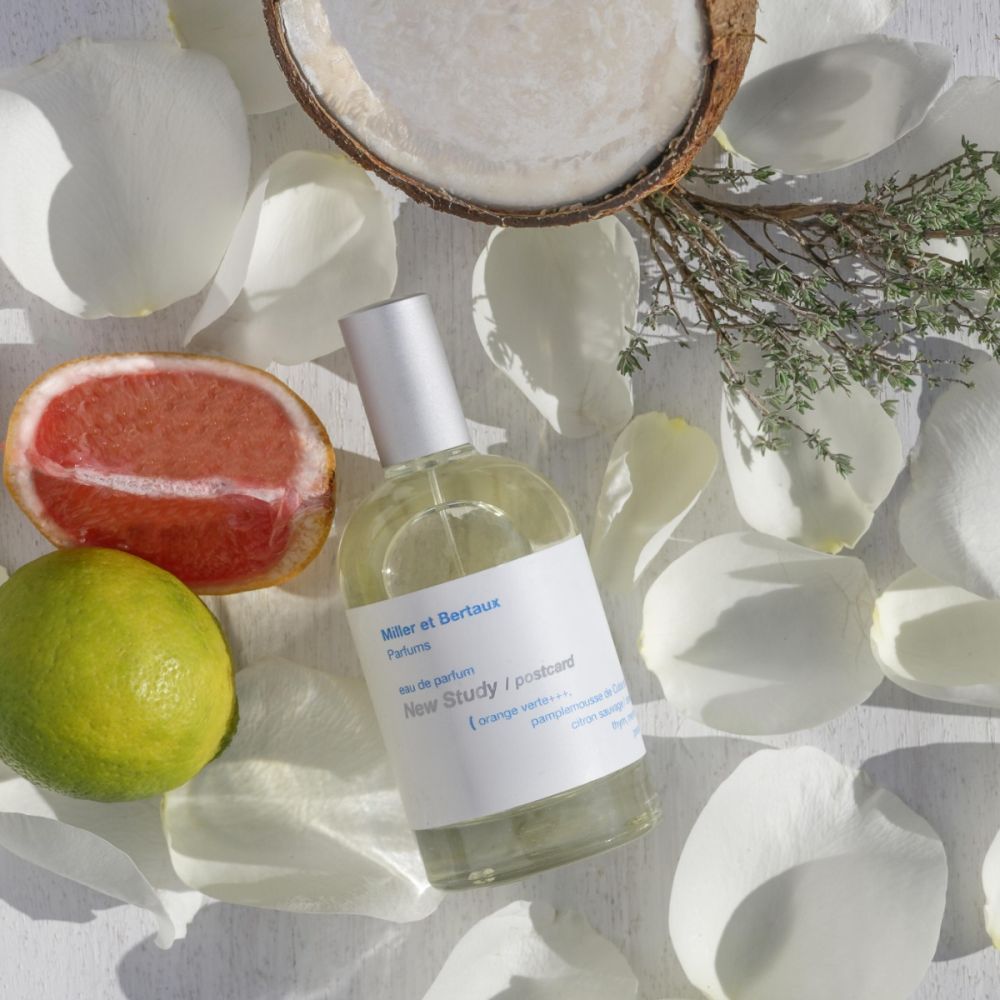
What are citrus perfumes?
Citrus perfumes, also called hesperidic, form one of the oldest families in Western perfumery: they were born from the essences extracted by cold pressing the peel of citrus fruits, without the need for distillation. Their signature is a bright, direct opening that's instantly recognisable, the same one that popularised the original Eau de Cologne in the 18th century, when bergamot, lemon and rosemary dissolved in alcohol became one of the first everyday fragrances in Europe. That heritage still shapes the character of today's citrus perfumes: fresh, transparent and designed to refresh rather than leave a heavy trail.
Typical notes of the citrus family
The hesperidic heart is built with essential oils from citrus peel, each with a different nuance within the same register:
- Bergamot, the most used in fine perfumery, with a slightly floral citrus note that's less acidic than lemon.
- Lemon and lime, with a sharper, greener opening.
- Mandarin and sweet orange, with a more delicious, rounder edge.
- Grapefruit, bitter and very present in contemporary fragrances.
- Neroli and petitgrain, extracted from the flower and leaf of the bitter orange tree, adding a floral-green nuance to the blend.
A technical challenge: fleetingness
Citrus oils are extremely volatile and degrade with light, so on their own they barely last an hour on the skin. That's why almost no citrus perfume relies solely on that note: perfumers support it on a base of clean musks, light woods like cedar or small doses of white flowers to extend its life without betraying the initial sense of freshness.
How it differs from other fresh families
It's worth not confusing citrus with aquatic or green notes: a citrus perfume smells like freshly squeezed fruit peel, not the sea or cut grass. Compared to the aromatic family, which combines citrus with herbs like rosemary or lavender, pure citrus keeps the fruit as the almost absolute star, with a discreet base that's barely noticeable.
When to wear a citrus perfume
It's the family par excellence for mornings and warm weather: it feels clean and light even in high temperatures, and its discreet trail works well in work settings. It shines most in spring and summer, although a well-dosed bergamot also works as a fresh opening in fragrances worn year-round. Since it doesn't last long, it allows for, and almost calls for, reapplication throughout the day, something many people turn into part of their ritual.
Who likes a citrus perfume: character
It appeals to those looking for a discreet, clean and easy-to-wear fragrance, without excessive presence or a heavy trail. It's common as a first fragrance or as an everyday option for those who prefer not to announce themselves with their perfume from a distance. Its inherently unisex character makes it one of the most versatile families: it appeals both to those seeking pure freshness and to those using it as a bridge towards more complex fragrances, since its simplicity makes it easy to identify and enjoy without the need for prior experience in perfumery. It's also a common choice for those who sweat easily or work in enclosed environments, where a heavy trail can feel invasive.
Formats: from classic cologne to citrus eau de toilette
The citrus family was born linked to a specific format, eau de cologne, with very low concentration of essence and designed to refresh at any time of day without saturating the surroundings. That tradition is still alive, but it coexists with eau de toilette versions that are somewhat more concentrated, where the citrus rests on a more present base to gain a couple of extra hours of life without losing its characteristic lightness. Recognising this difference helps when choosing: if what you're looking for is that burst of instant freshness to reapply several times, the classic cologne remains the option most faithful to the spirit of the family; if you prefer something that lasts longer without giving up the citrus character, it's worth looking at compositions where bergamot or grapefruit are combined with a somewhat more pronounced woody or musky base.
Common mistakes when choosing a citrus fragrance
A common mistake is judging the perfume only by the first sniff: since the top note is precisely the most intense part, a citrus fragrance can seem very powerful in the bottle and become almost imperceptible half an hour later on the skin. Another mistake is applying too much thinking it fades quickly, when it's actually better to reapply moderately on pulse points rather than spraying large amounts at once. It's also worth keeping in mind that heat and sweat intensify citrus projection, so on very hot days less is usually needed than in winter.