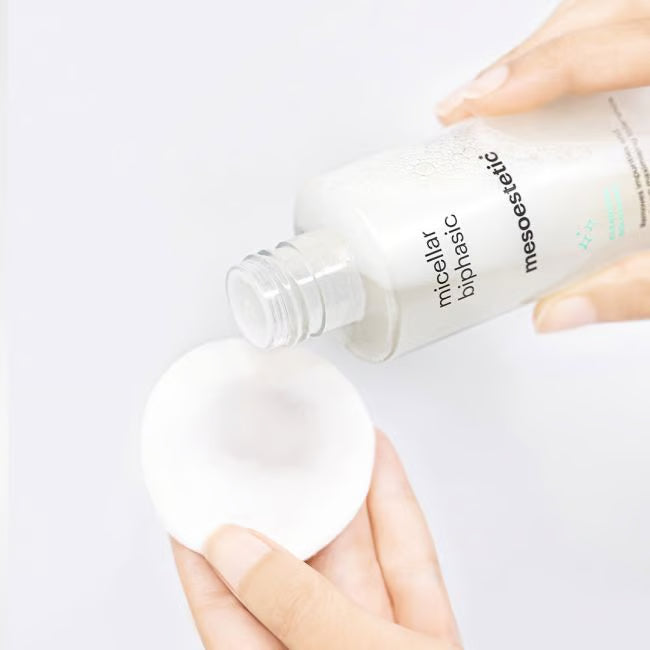
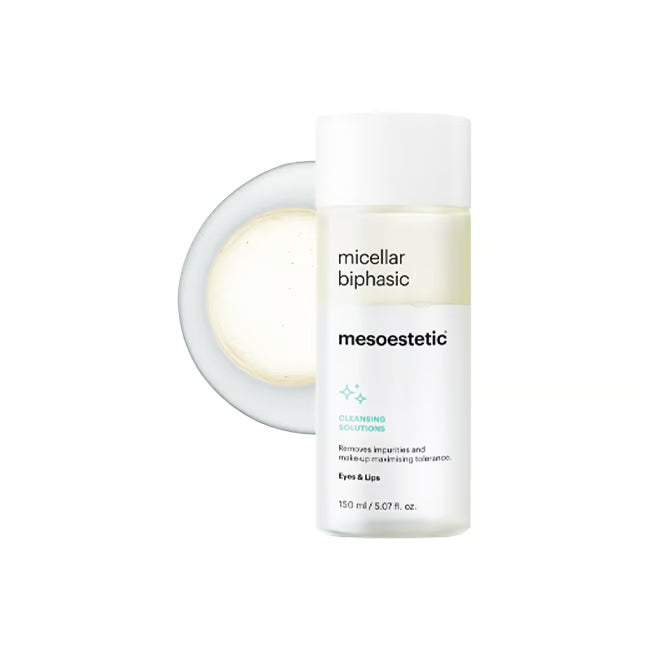
What micellar water is and how it works
Micellar water is a cleansing solution made up of micelles, tiny particles that act like little magnets: they attract dirt, excess sebum and makeup and hold them in suspension, so they're lifted away when you pass the cotton pad over the skin, with no need to rub hard or rinse with water afterwards. That's precisely its big advantage over other cleansers: speed and convenience, especially when there's no sink nearby.
It works as a makeup remover and cleanser in a single step, making it a popular choice for rushed mornings, for touching up makeup mid-day, or as a first step in your evening cleansing routine before a more thorough cleanser.
How to choose your micellar water according to your skin type
- Sensitive or reactive skin: this tends to be its most natural territory, thanks to its gentleness and good tolerance; it's best to choose alcohol-free formulas with minimal fragrance.
- Dry skin: versions with glycerin or hydrating actives, which cleanse without accentuating that tight feeling.
- Oily or combination skin: specific formulas that help remove excess sebum without drying out the skin or causing the rebound effect of harsher cleansers.
- Blemish-prone skin: lighter micellar waters, designed not to leave a greasy residue on the skin.
How to use micellar water correctly
The gesture is simple, but it's done better than it might seem at first glance:
- Soak a cotton pad with enough product, without skimping on the amount.
- Sweep the cotton pad over your face with gentle movements, from the inside out, without rubbing.
- Over the eyes, hold the cotton pad in place for a few seconds before sliding it, so it can properly dissolve the makeup before wiping it away.
- Change the cotton pad as many times as needed until it comes away clean.
- If the cotton pad still shows residue after several passes, it's a sign that you should follow up with a water-based cleanser.
Do you need to rinse off micellar water with water?
In its original concept, micellar water is designed so you don't need to rinse it off, and that's part of its appeal. In practice, many people prefer to rinse with water afterwards, especially at night or if their skin is oily, to make sure no residue of micelles or makeup is left on the skin before applying the rest of their routine. In the morning, as a quick step, it's usually fine not to rinse.
Micellar water morning and night
In the morning it serves a light purpose: it refreshes the skin and removes traces of sweat or the previous night's product in just a few seconds, leaving the skin ready for serum and sunscreen. At night, its role changes: it acts as a first step to remove the day's makeup, and in most cases it's best to follow up with a second cleanser if you've worn foundation, water-resistant sunscreen or heavy eye makeup, to ensure a truly thorough cleanse.
Common mistakes when using micellar water
The most common one is using too little product and rubbing instead, which puts unnecessary strain on the skin. It's also common to think that micellar water always replaces a rinse-off cleanser: it's a great option for occasional use, but as your only daily cleansing step it can leave residue on the skin over time, especially on oily skin or with long-lasting makeup.
Micellar water versus other cleansing formats
Compared to a cleansing gel, micellar water wins on speed but loses some deep-cleansing power: the gel activates with water and more thoroughly removes sebum built up in the pores, while micelles work by attraction, without the need to rub. Compared to a milk or a balm, it's much lighter and quicker to use, but also less comforting for very dry skin looking for an extra bit of comfort during cleansing.
That's why, in many routines, micellar water doesn't compete with other formats but complements them: as a quick first step before a more thorough cleanser, as a midday gesture to refresh the skin without removing makeup, or as a travel option when a sink isn't always available. Having a bottle in your bag or on your nightstand solves many moments when a traditional cleanser isn't practical.