What is gua sha
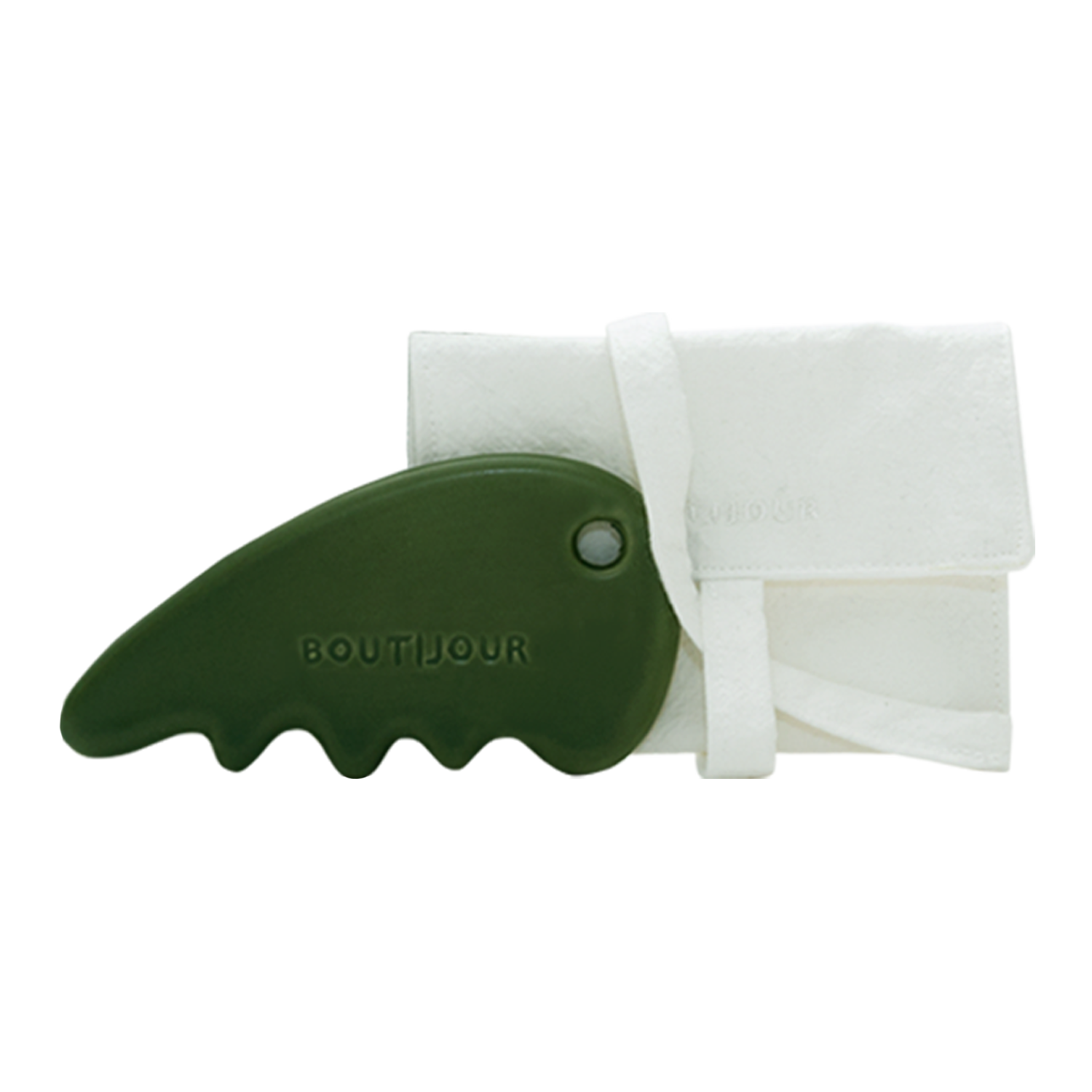
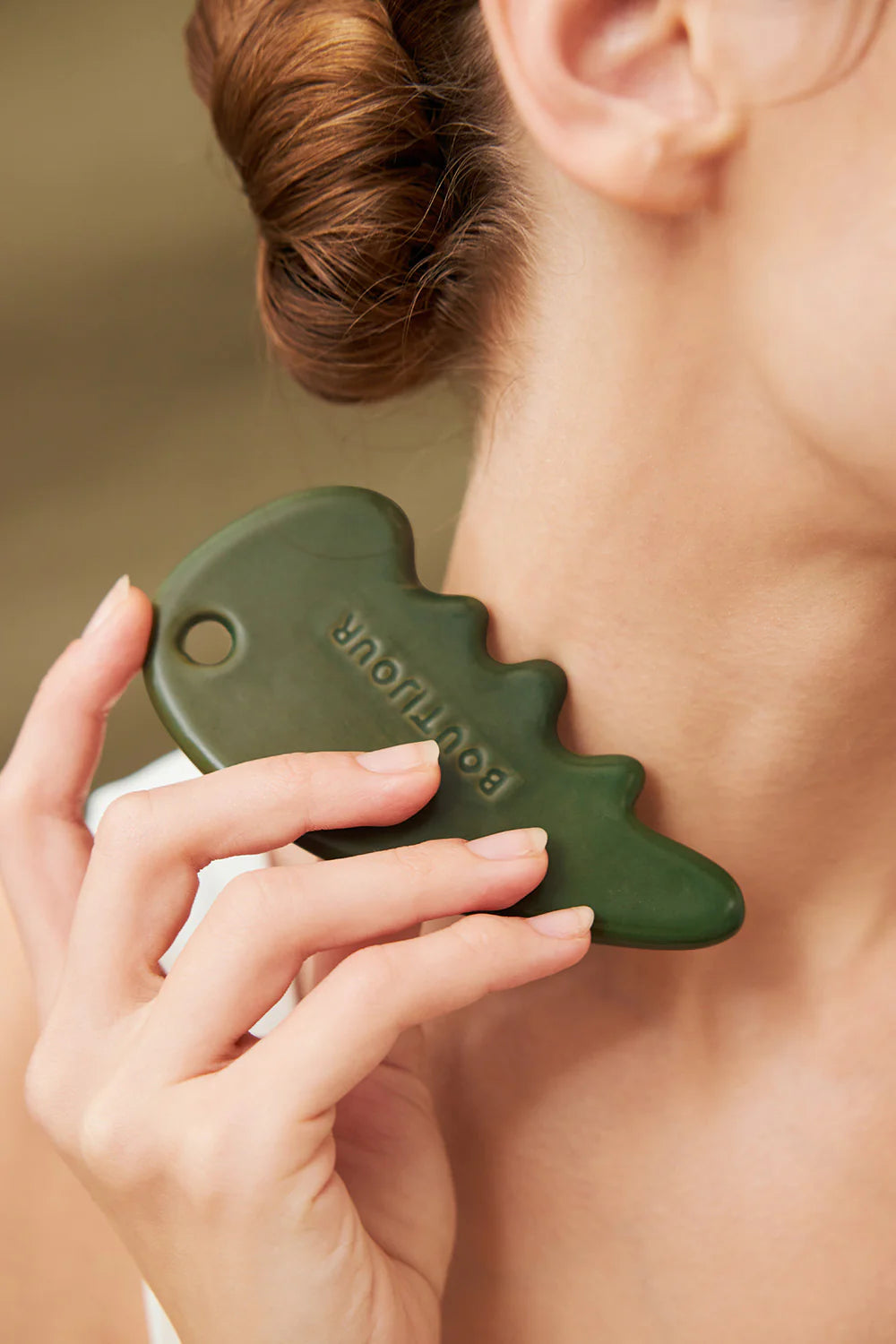
Gua sha is a flat tool, carved from stone or other materials, that is glided over the skin of the face or body using a gentle scraping technique. Its origin dates back to traditional Asian wellness practices, and in recent years it has become popular as a facial care tool, adapted with shapes and edges specifically designed for the contours of the face. Unlike a roller, the gua sha rests flat on the skin and glides with controlled pressure, allowing more precise work on specific areas such as the jaw or cheekbone.
Gua sha shapes and materials
Gua sha stones usually feature several edges on the same piece, each designed for a different area of the face:
- Wide curved edge: fits the jawline and cheekbones.
- "V"-shaped notch: fits the eyebrow contour and the nose area.
- Small point: allows you to work on specific points, such as the space between the eyebrows or the temples.
- Straight edge: useful for the neck and larger areas such as the forehead.
Among the most common materials are rose quartz, jade, agate or stainless steel. Each stone has a slightly different feel and weight, but they all share the smooth, polished surface needed to glide without creating friction on the skin.
How to use gua sha step by step
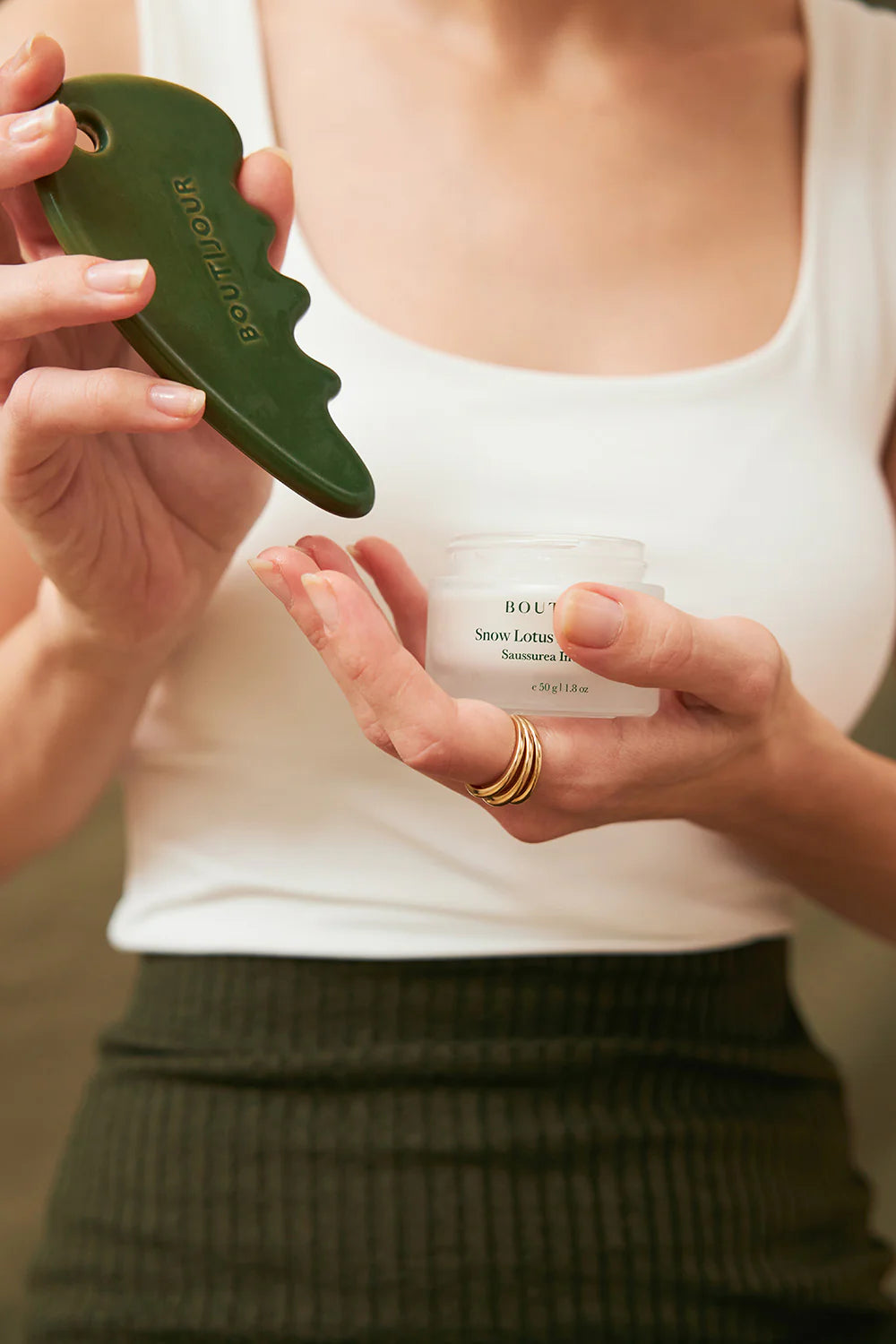
Before you begin, the skin should be clean and have a slip product applied (facial oil or serum) that allows the stone to move without dragging the skin:
- Always start with the neck, using upward movements from the base towards the jaw.
- Continue along the jaw towards the ear, and from the centre of the chin towards the ears.
- Work the cheeks from the nose towards the temples, following the direction of the cheekbones.
- On the forehead, glide from the centre towards the temples and from the eyebrows towards the hairline.
- Always finish by moving down towards the neck, to follow the downward path.
Keep an angle of about 15 to 30 degrees between the stone and the skin, and repeat each movement three to five times per area, with firm but comfortable pressure, never painful.
How often to use gua sha
Facial gua sha can be added to your routine several times a week, spending between five and ten minutes on the full session. Many people include it in their night-time routine, after applying serum, as a gesture that also helps the product spread more evenly over the skin. It isn't necessary to use it daily to notice its benefits: consistency matters more than frequency.
Precautions before using gua sha
It is recommended to avoid using gua sha on skin with open wounds, visible irritation, recent sunburn or any active breakout that makes the skin more sensitive to touch, as gliding may be uncomfortable in those areas. Pressure should always be adapted to each person's sensitivity, being especially gentle around the eyes. If you have a specific skin condition or doubts about its use, it is advisable to consult a skin professional beforehand.
How to care for your gua sha stone
After each use, clean the stone with warm water and a mild soap, drying it well before storing it to prevent it from absorbing moisture. Keeping it in a pouch or cloth protects the surface from knocks and scratches, which could create unwanted friction on the skin in future uses. With simple care, a good-quality gua sha stone can be part of your facial routine for a long time.
How to combine gua sha with the rest of your routine
Gua sha works well as the final step of your facial care routine, after cleansing and applying serum or oil, since the product provides the slip needed for the stone to glide without dragging the skin. It can also be used as a separate moment, dedicated solely to the massage gesture, without needing to link it to the rest of the usual steps. Some people prefer to keep it for the evenings, as a ritual that marks the end of the day, while others incorporate it in the morning to start the day with a sense of clearer skin. There isn't a single recommended time: what matters is the consistency with which the gesture is repeated throughout the week, rather than the specific time of day chosen to practise it.